
Many people take photos. Few of them really see.
A week in Northern Kenya, slow enough to see it properly.
Many people take photos. Few of them really see.
A week in Northern Kenya, slow enough to see it properly.
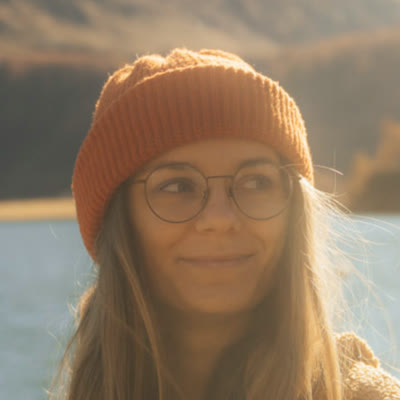
I've never been interested in the perfect photograph, the sharp one, the one that's technically flawless but lacks emotion. What I'm after is the feeling of a place and the moments in between: the way light transforms a landscape, animals simply going about their lives, encounters that can't be planned because they were never meant for you in the first place.
I've spent years photographing raw places, mostly in the north, like the mountains, moorlands and coastlines of Iceland, Norway and Finland. Places where you wait a long time for the light, and often even longer for wildlife. They've not only trained my eye to notice the beauty that surrounds us, but they've also taught me patience.
Northern Kenya feels like the opposite of everything I've photographed so far, and I think that's exactly why I'm drawn to it. I've never photographed Africa before, and I'm telling you that on purpose, because that's the point. I'll be seeing this landscape with fresh eyes, just as you will: without expectations of what should happen, just the excitement of discovering a place that's completely new to me, and perhaps to you too.
One place I've dreamed of visiting for years is Reteti Elephant Sanctuary. I still remember seeing photographs of it in National Geographic years ago. Back then, it felt impossibly far away. Like one of those places I admired from a distance, never imagining I'd one day experience it myself.
About ten years ago, Reteti became Africa's first community-owned elephant sanctuary, where orphaned calves are cared for by the local community before returning to the wild. It's built on the belief that conservation works best when it's led by the people who have lived alongside wildlife for generations.
The landscape and wildlife of the Namunyak Community Conservancy remain wild because the people who call this place home chose to protect them. That's one of the reasons I wanted this journey to be slow: it deserves to be experienced instead of rushed.
We'll spend the entire week in the Namunyak Community Conservancy in Northern Kenya rather than moving from lodge to lodge. We'll head out before sunrise for game drives, explore on foot with Samburu guides who know this landscape by heart, and one morning, anyone who'd like to can join me on horseback for a completely different perspective.
Throughout the week, we'll also learn about the wider work of the Sarara Foundation and the conservancy itself: from wildlife protection and habitat restoration to education, healthcare and the community-led initiatives that make conservation possible. We'll meet the rangers, trackers and members of the Samburu whose deep knowledge of this landscape has helped shape and protect it for generations. For me, that's just as important as the wildlife itself.
Photography will always be part of how I experience a place, but it's never only about the images. I want to leave with a deeper understanding of Northern Kenya, the people who protect it, and the stories that so often go unnoticed.
If that resonates with you, I'd love to discover this place together.
Older, harder country. Semi-arid land broken by hills and acacia and the dry rivers that hold it together, stretching further than you can take in. The light runs long and low at both ends of the day, and the air is clear enough that distance stops meaning much. The animals are wilder for it, less used to being watched, and the birds are everywhere once you learn to look: hornbills, bee-eaters, the flash of a roller crossing the track. You can go a long while seeing no one at all. The emptiness isn't absence. It's room to observe.
Across Northern Kenya, the communities that share the ground with the animals are the ones protecting them, and it works better than almost anywhere on the continent. You see it most clearly at Reteti, where orphaned elephant calves are raised by the Samburu themselves, the first community in Africa to run a sanctuary of its own, the calves fed on goat milk bought from local women. It's a symbiosis between the animals and the people who keep them. One of the quietest, most genuine conservation stories anywhere, and you'll spend time inside it.
You'll see it clearly. And you'll help it last.
Up close, in no hurry.
No racing from one sighting to the next. Days slow enough to observe properly, not just photograph and move on. The best hours are often the ones where you simply stay and watch.
Time with the trackers, rangers, and the communities who live alongside all of this. No staged cultural visits, but the people who actually make this place work.
Marina next to you throughout. Not teaching from the front, but exploring alongside you. Curious about the same things, looking for the same details, the light, the quiet moments, the birds most people walk past. You’ll leave seeing more than when you arrived.
You’ll have more in common than you think. Not because you share professions, age, or background, but because you each chose to spend a week in Northern Kenya trying to understand the same things.
A small group, eight to twelve. The kind of people who’d rather do one thing deeply than tick off ten. You arrive as strangers. By the end of the week, you’ll be sitting around the fire with friends.
Marina brings the eye. We handle everything else.
You see a week that simply works. Behind it: a Swiss company that designs high-end journeys most people never find. This is one of them.
It is all arranged. Accommodations, transfers, meals, the experiences. Out here that is not convenience, it’s what lets you be fully present for what you came for.
This is one week of what we do. Come earlier, stay longer, or let us build something entirely your own, here or anywhere else worth going. The trip is fixed. The rest is open.
Our travellers consistently rate us five stars. Read what they say.
We've travelled a lot, but this one felt different.— Maximilian R.
Everything after arriving, really. Flights to camp, all transfers, seven nights (one in Nairobi, six in camp), every meal and the drinks alongside, and laundry. Game drives, walking safaris, a horseback safari, time with the Samburu community plus on conservation projects, and a visit to Reteti. And Marina alongside you.
Just your international flights, visas, travel insurance, tips, and premium wines and spirits.
This trip is for people who want to go deeper, not just visit, and who are good company over the long days that come with that.
We read every application ourselves, and reply to each one personally.
Still have a question? A few practical answers just below.
Applying isn't paying, and it isn't a commitment you can't step back from. When you apply, you're requesting a place while we confirm details together, it's the start of a conversation, not the final step. A deposit is what secures your participation on the trip; nothing is binding before that.
We'll be in touch personally to go through the details, dates, room arrangements, anything specific to you, before anything is confirmed. Once you're ready, a deposit secures your place. Everything from there (documents, logistics, the finer points) we handle with you directly.
We'd rather you knew this upfront than discovered it later: deposits are non-refundable once paid, reflecting the commitments we make to lodges and guides on your behalf. But you're not necessarily stuck, if someone can take your place, and both we and the host are happy with the fit, we'll do what we can to arrange the transfer. We also strongly recommend travel insurance, which covers you for the situations we can't.
This is the one to feel secure about: if a trip doesn't go ahead, you receive a full refund. That risk sits with us, not you.
Everything once you're with us: full board, all scheduled activities (game drives, guided walks, your visit to Reteti, time with the Samburu community, and more), bush flights, local airstrip transfers, and laundry. What's not included: international flights, visas, travel insurance, tips, and premium wines and spirits.
In glamping-style safari tents with en-suite bathrooms, set in the wild of Namunyak Conservancy in Kenya's far north, the kind of place that takes a deliberate effort to reach, which is part of the point. Comfortable and well looked after: proper beds, generous bedding, a hot shower. Considered rather than minimal, comfortable enough to relax into, simple enough that you still feel like you're in the wild, which is exactly what this stretch of Kenya is.
Yes, tell us when you apply and the camp will take care of it.
Manageable for most people in reasonably good health, this isn't an endurance trip. The days are built around game drives by vehicle, with guided walking safaris and one morning on horseback. None of it is especially intense, and you don't have to join the walks or the ride if you'd rather not, nothing is compulsory. Mornings start early to make the most of the cooler hours and the wildlife that's active then.
Still have a question? Write to us at info@theoccasionist.ch.