
Wild country with someone that understands it.
Northern Patagonia with Forest Barkdoll-Weil.
Wild country with someone that understands it.
Northern Patagonia with Forest Barkdoll-Weil.
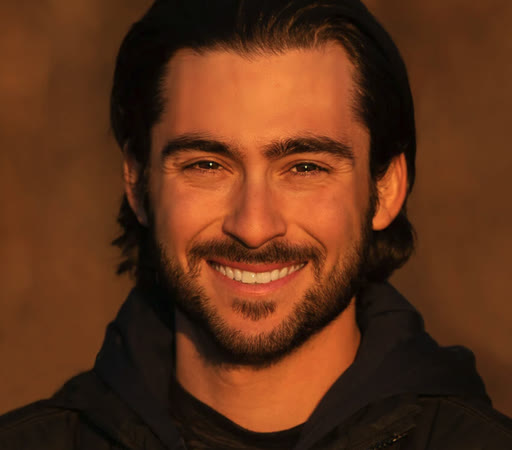
I shoot for a living, mostly in places that are hard to reach. Storms, dark skies, mountains at the hour when the light does something it will not do again. I grew up on the coast of Maine, climbed my first real peak at six, and I have spent the years since learning where to stand and when to wait.
Last April I went deep into the Fitz Roy country in the far south, backpacking for days to be in the valley at the right moment. This trip is the other kind of Patagonia. We start in the north, near Bariloche, on the Rio Manso. Four nights in a camp on the river, where the water is loud enough that you stop reaching for your phone, partly because there is no signal to reach for. Rafting, a day on the bikes, a morning with the condors, and nights with no town for a hundred kilometres. We have timed it for the new moon, so the sky will be as dark as it ever gets. The camp is cleared for drones, too, if you fly.
When it is time to leave the river, we go out by water. A boat across Nahuel Huapi, into bays no road reaches, and then three nights at a grand old place on the lake. The water goes still, the days go slow, and you stop counting them.
This is not a workshop. I will have my cameras out, and if you want to know how I read a place I am happy to get into it, around the fire, on the water, wherever it comes up. But we are here for Patagonia, not for a classroom. I am along because I love this, and I am decent company on a river.
"Manso" means tame, which is the river's private joke. It comes off the black glacier on Cerro Tronador as meltwater, runs a hard turquoise through twelve kilometres of canyon, Class III and IV, between white-sand beaches and waterfalls that drop straight into it, and does not slow down until Chile.
The valley is the southern edge of Nahuel Huapi, which Argentina made its first national park in 1934, before most countries had thought to. Forest of coihue and cypress and the red-barked arrayán, peaks still holding snow at the end of summer, and a night sky with nothing under it for a hundred kilometres in any direction.
Then the lake itself. Nahuel Huapi runs long and cold into the mountains, its arms reaching places the roads gave up on. On a rise between two of them sits Llao Llao, the timber-and-stone hotel Alejandro Bustillo designed to look as though it had always been there.
Most of Patagonia's fame belongs to the far south, the towers and the postcard peaks. This is the north, the Lake District, and it asks something different of you.
The order is the whole design. The first four nights are the river. Cold mornings, moving water, condors overhead before you leave it. Active and unreachable, awake before anyone else. Then three slower days by the lake, which feel the way they do only because of the contrast. It's earned. Not for logistics. It's the trip.
Most of what stays with you, you won't be able to photograph.
Loud water first. Still water after.
A private transfer south from Bariloche airport with your guide, past the strung-together lakes of Gutierrez, Mascardi and Guillelmo. A soft hike into native forest to walk the travel out of your legs, then time with the John family, settlers who have worked this valley for generations. By evening you are at the camp, on the riverbank, for the first of four nights.
Rafting the Manso with specialist guides, down through the canyons at a pace set by how the group is finding the water. Turquoise water, real rapids, calm pools between them to get your breath back. Back to camp with the river still in your ears.
A full day on the valley trails by mountain bike, with e-bike support so the climbs are a choice and not a sentence. After dark, the night has its own event. The dates were set around the new moon, and this is the night of it: a guided session under the darkest sky of the month, with telescopes you can fit a camera to. The Milky Way comes up over Cerro Bastion and you stop talking for a while.
A guided hike up to Las Buitreras, where condors work the thermals above the valley, with a long picnic lunch on the trail. Forest will have his cameras out. You do not need one to come. You need to not mind waiting for the moment worth photographing. Then a last evening by the fire, the last night of the river.
The slow way out is across the lake. A private boat from Puerto Pañuelo onto Nahuel Huapi, into hidden bays, a picnic lunch, walks ashore where the day boats do not go. By evening you are at Llao Llao, and for the first time you sleep without the river in your ears.
Kayaking on the lake. A wine lunch by the water. An afternoon with nothing in it.
One more walk, over Cerro Llao Llao and down through the forest to Villa Tacul, with lunch on the trail. An afternoon loose in Bariloche. Then the farewell dinner at Jauja, the kind where the plates are cleared and nobody stands up to go.
Seven to fourteen people who read "remote" and "active" as the reason to come, not the reason to hesitate. The kind who would rather do one thing properly than tick off ten.
You arrive not knowing each other. Four nights sharing a river, a fire and a phone signal that barely works does something a hotel lobby never will. By the time the trip ends, you are a group, and the last dinner proves it.
Forest brings the eye. We handle everything else.
You see a week that simply works. Behind it: a Swiss company that designs high-end journeys most people never find. This is one of them.
It is all arranged. The camp, the hotel, every transfer, every guide, every meal. Out here that is not convenience, it is what lets you be fully present for what you came for.
This is one week of what we do. Come earlier, stay longer, or let us build something entirely your own, here or anywhere else worth going. The trip is fixed. The rest is open.
Our travellers consistently rate us five stars. Read what they say.
We've travelled a lot, but this one felt different.— Maximilian R.
Almost everything, from the moment you land in Bariloche. Private transfers throughout, four nights at the river camp and three at Llao Llao on the lake, every meal and the drinks alongside, bilingual guides and national park fees. The days are all in: the hikes, the settler-family visit, rafting the Manso, a full day on the bikes, the new moon night at the telescopes, the condors at Las Buitreras, the private boat across Nahuel Huapi, the kayaks and the wine lunch, and the last dinner at Jauja. And Forest, the whole way.
Your flights to Bariloche, premium wines and spirits, tips, visa, and travel insurance.
This trip is for people who want to go deeper, not just visit, and who are good company over the long days that come with that.
We read every application ourselves, and reply to each one personally.
Still have a question? A few practical answers just below.
Applying isn't paying, and it isn't a commitment you can't step back from. When you apply, you're requesting a place while we confirm details together, it's the start of a conversation, not the final step. A deposit is what secures your participation; nothing is binding before that.
We'll be in touch personally to go through the details, dates, room arrangements, anything specific to you, before anything is confirmed. Once you're ready, a deposit secures your place. Everything from there, documents, logistics, the finer points, we handle with you directly.
We'd rather you knew this upfront than discovered it later: deposits are non-refundable once paid, reflecting the commitments we make to the camp, the hotel and the guides on your behalf. But you're not necessarily stuck. If someone can take your place, and both we and Forest are happy with the fit, we'll do what we can to arrange the transfer. We also strongly recommend travel insurance, which covers you for the situations we can't.
This is the one to feel secure about: if a trip doesn't go ahead, you receive a full refund. That risk sits with us, not you.
Two places, deliberately. Four nights at a camp on the Rio Manso, bell tents on raised platforms with proper beds and hot water, a fire pit for the evenings, and not much else for a long way in any direction. Then three nights at Llao Llao, in lake-view rooms in the Bustillo wing above Nahuel Huapi. The remoteness of the first is the point. The comfort of the second is not really the point at all, which is what makes it land.
Yes. Every meal and the drinks alongside, at the camp and at Llao Llao, through to the farewell dinner at Jauja. House wine, beer and soft drinks are covered; premium wines and spirits are not. The one stretch of open time is an afternoon in Bariloche town on the last day, yours to walk and wander.
Yes. Tell us when you apply and we'll plan accordingly.
Active, not extreme. Rafting with specialist guides, a full day riding with e-bike support, two guided hikes, kayaking on the lake. You should be in good health and comfortable on your feet and on the water. Nothing is compulsory, and the lake days are built to slow down. This is refined and active, not an endurance expedition.
There are no scheduled lessons or sessions. Forest is here as the draw and as good company. He will have his cameras out, and if you want to geek-out over equipment or know how he reads the light on the river or the sky over Bastion, he is glad to get into it. What you get is proximity to how someone sees, not a syllabus. That said, if you do want to shoot, the trip makes room for it: the camp is cleared for drones, and the stargazing night uses telescopes you can put a camera on.
The nearest town is hours behind you. The river is the loudest thing when you're asleep and the stars the brightest. You are not roughing it, the beds and the hot water are real, but you are genuinely out there, and that is the half of the trip you will talk about most.
Because the contrast is the trip. Four nights earning it on the river, three nights being rewarded for it on the lake. Each one makes the other land harder. Do them in this order and the week works.
The dates are set around the new moon, so the stargazing night falls under the darkest sky of the month. Early March is the tail of the Patagonian summer: long days, the river still running, and the January crowds gone home.
Still have a question? Write to us at info@theoccasionist.ch.